

N’Kob Morocco: The Hidden Berber Village Most Tourists Miss
If you are looking for a side of Morocco far from the busiest tourist routes, N’Kob Morocco is a destination worth discovering. Located between the dramatic Saghro Mountains and the Draa Valley, N’Kob is a peaceful Amazigh village known for its kasbahs, palm groves, traditional architecture and strong local culture.
Unlike Morocco’s famous imperial cities, N’Kob offers a slower and more authentic experience. Here, you can walk through quiet streets, meet local people, explore ancient kasbahs and discover a landscape shaped by the mountains, desert and oasis.
Where Is N’Kob Morocco?
N’Kob Morocco is located in southeastern Morocco, in the Zagora region, between the Saghro Mountains and the Draa Valley. Its location makes it an excellent stop for travelers exploring southern Morocco.
N’Kob sits on an important route connecting destinations such as Ouarzazate, the Draa Valley and Merzouga. This makes the village particularly interesting for travelers taking a Morocco desert tour.
The journey to N’Kob is part of the experience. The landscape changes from mountains to rocky plateaus, palm-filled valleys and traditional villages as you approach the oasis.
Why Visit N’Kob?
N’Kob is different from the better-known destinations in Morocco.
While places such as Marrakech and Ait Ben Haddou attract large numbers of visitors, N’Kob remains much quieter. The village provides an opportunity to experience southern Morocco at a more relaxed pace.
Here are some of the reasons to visit:
- Discover traditional Amazigh architecture
- Explore historic kasbahs
- Walk through the palm oasis
- Experience local village life
- Discover the landscapes of the Saghro Mountains
- Taste traditional Moroccan and Amazigh food
- Meet local people and learn about their culture
- Enjoy a peaceful stop between the mountains and the desert
- Use N’Kob as a gateway to the Draa Valley and Sahara
The Kasbahs of N’Kob
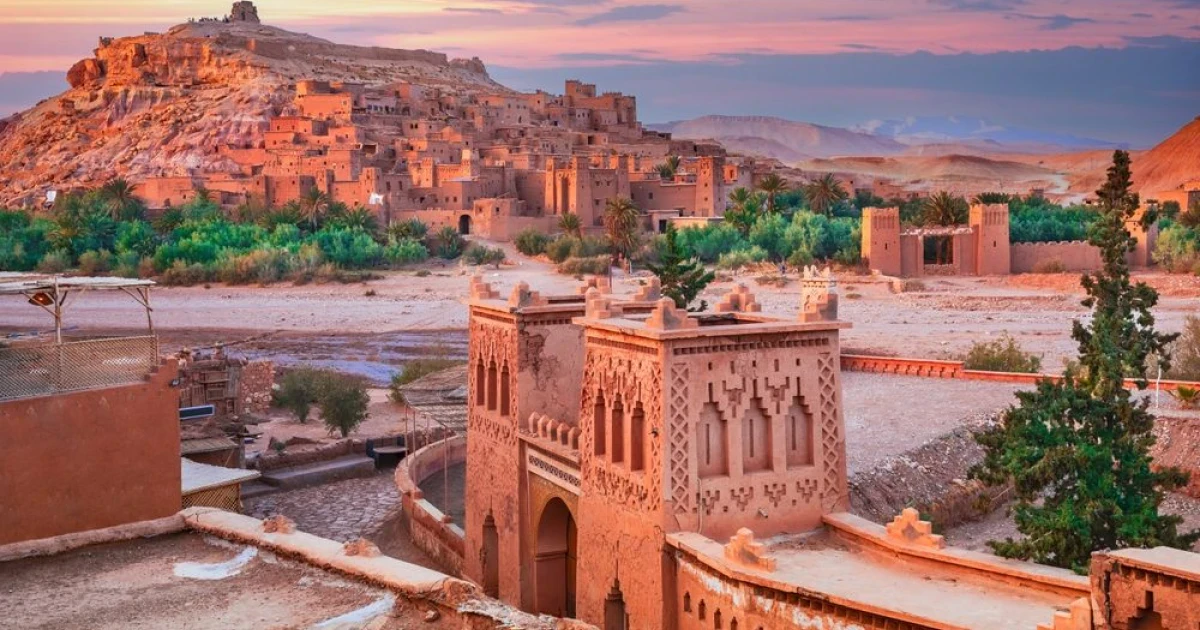
One of the most distinctive features of N’Kob Morocco is its traditional kasbah architecture.
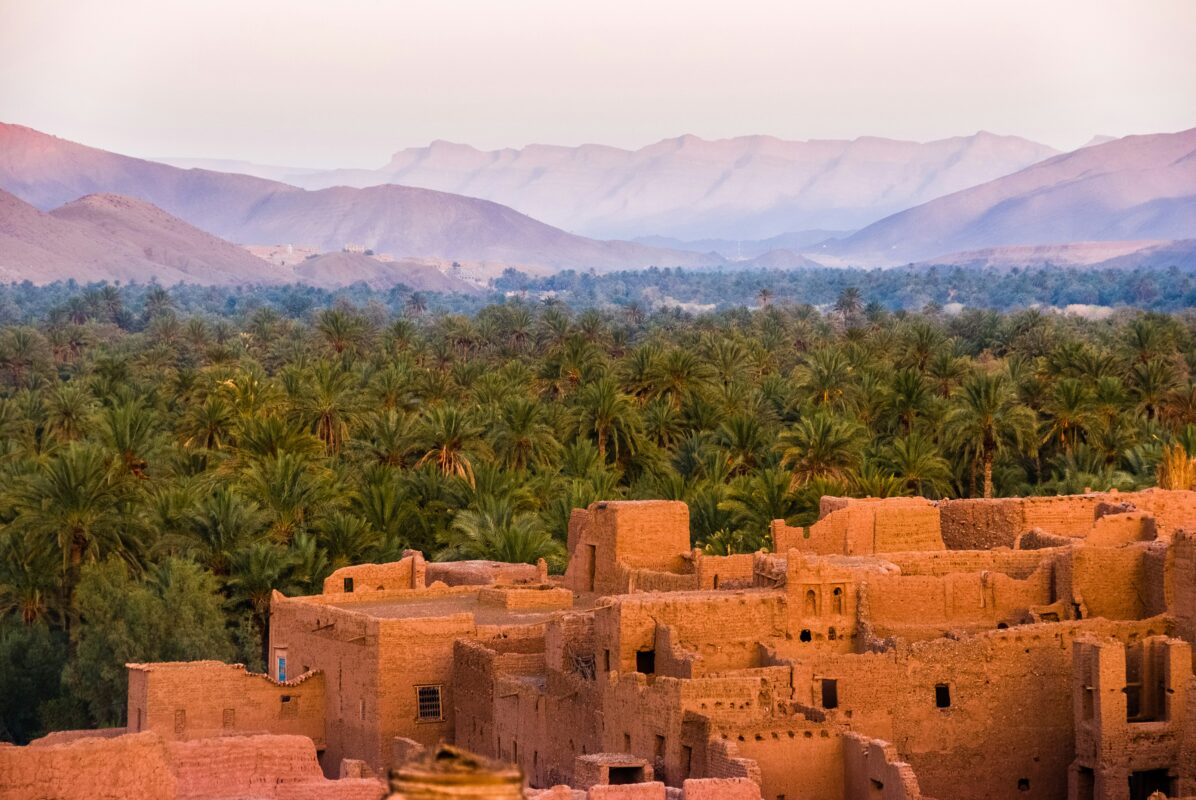
The village and surrounding area are famous for their earthen kasbahs, built using traditional materials and techniques adapted to the dry climate of southeastern Morocco.
Walking through N’Kob gives you the chance to see these buildings up close rather than simply photographing them from the road.
The narrow streets, decorated doors, mud-brick walls and surrounding palm trees create a strong sense of place.
For photographers and travelers interested in architecture, N’Kob offers plenty of opportunities to discover details that are easy to miss when traveling quickly through southern Morocco.
Explore the N’Kob Palm Oasis
Beyond the kasbahs, the palm oasis is an important part of village life.
Date palms grow alongside other crops, creating a green contrast with the dry landscapes surrounding the village. Walking through the oasis can be a peaceful way to experience the relationship between the local community and its environment.
The contrast between green palms, earthen kasbahs and the surrounding mountains makes N’Kob particularly beautiful in the early morning and late afternoon.
N’Kob and Amazigh Culture
N’Kob is deeply connected to Amazigh culture and the traditions of southern Morocco.
Local architecture, food, language, crafts and everyday life reflect a heritage that has developed over generations.
Rather than experiencing Amazigh culture only through a museum or organized performance, visitors in N’Kob can see aspects of everyday village life.
A conversation with a local resident, a traditional meal or a walk through the old streets can become one of the most memorable parts of a trip through Morocco.
The Saghro Mountains Near N’Kob
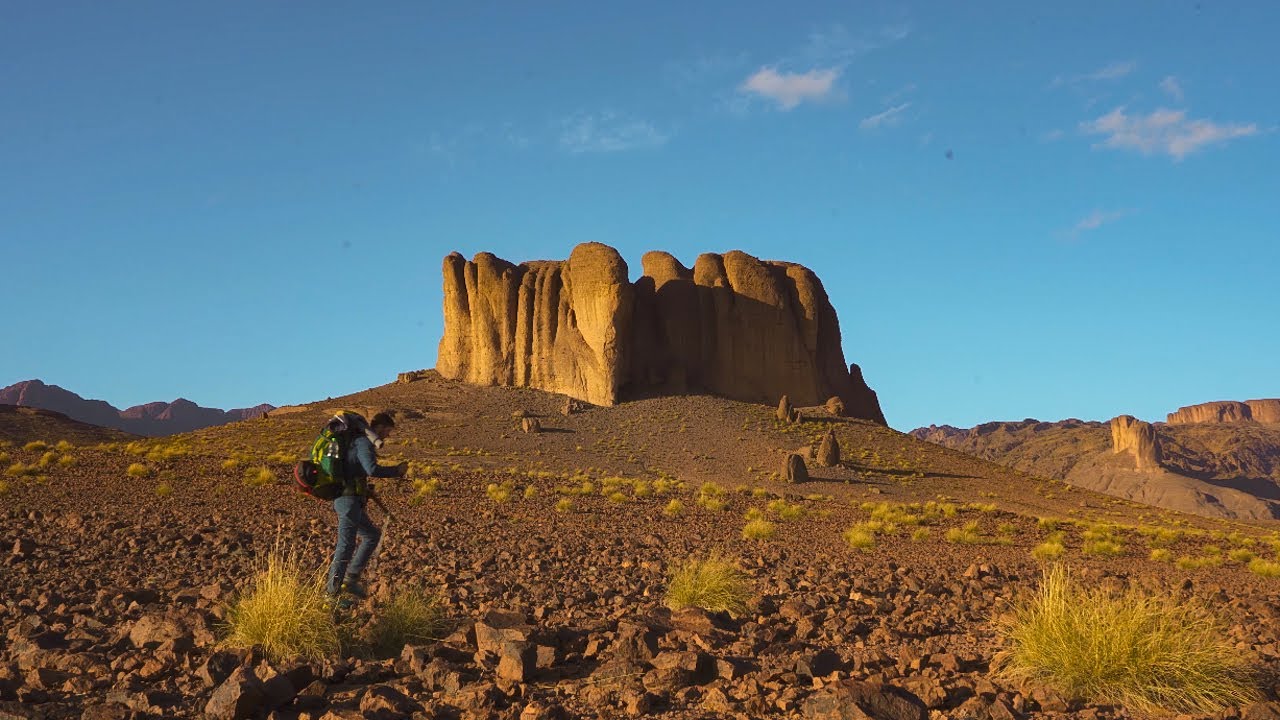
N’Kob lies close to the spectacular Saghro Mountains, a rugged mountain range known for volcanic-looking rock formations, dry valleys and dramatic landscapes.
The Saghro landscape is very different from the green High Atlas. It feels wild, remote and almost otherworldly.
For travelers who enjoy hiking, photography and nature, the area around N’Kob provides opportunities to explore landscapes that are rarely included in standard Morocco itineraries.
One of the most impressive natural landmarks in the region is Bab N’Ali, a dramatic rock formation in the Saghro Mountains.
N’Kob and the Draa Valley
The Draa Valley is another major attraction near N’Kob.
The valley stretches through southeastern Morocco and is known for its palm groves, kasbahs and oasis landscapes. Traveling through the Draa Valley gives visitors a chance to see a different side of Morocco, where agriculture and traditional settlements exist alongside an arid environment.
A journey combining N’Kob Morocco and the Draa Valley can be particularly rewarding for travelers interested in history, landscapes and local culture.
Things to Do in N’Kob Morocco
Although N’Kob is a small village, there are several experiences worth adding to your itinerary.
1. Walk Through the Old Village
Take your time exploring the traditional streets and discovering the architecture of the kasbahs.
2. Visit the Palm Oasis
Walk beneath the palm trees and observe how agriculture is practiced in this desert environment.
3. Discover Local Amazigh Culture
Meet local people, learn about traditions and enjoy the hospitality of the community.
4. Try Traditional Food
Ask about local dishes and enjoy Moroccan tea and traditional cuisine.
5. Explore the Saghro Mountains
If you have more time, consider a hike or excursion into the surrounding mountains.
6. Visit Bab N’Ali
For adventurous travelers, the dramatic rock formations of Bab N’Ali are an unforgettable highlight of the Saghro region.
7. Stay in a Local Kasbah
Spending a night in or near N’Kob allows you to experience the village when the day-trippers have left and the atmosphere becomes especially peaceful.
Best Time to Visit N’Kob Morocco
The best periods to visit N’Kob Morocco are generally spring and autumn, when temperatures are more comfortable for exploring the village, oasis and surrounding landscapes.
Winter can also be a beautiful time to visit, especially during the daytime, although nights can become cold.
Summer is considerably hotter, so travelers visiting during this period should plan outdoor activities for the morning or late afternoon.
How to Get to N’Kob
N’Kob can be reached by road from several destinations in southern Morocco.
It is approximately:
- A few hours from Ouarzazate
- A scenic drive from Zagora
- Accessible from the Draa Valley
- A useful stop when traveling between the Saghro region and Merzouga
Travel times depend on the route, road conditions and stops along the way.
Because the journey passes through spectacular landscapes, it is worth allowing time to stop for photographs and explore villages rather than treating N’Kob simply as a transit point.
N’Kob on a Morocco Desert Tour
One of the best ways to experience N’Kob Morocco is to include it in a southern Morocco desert itinerary.
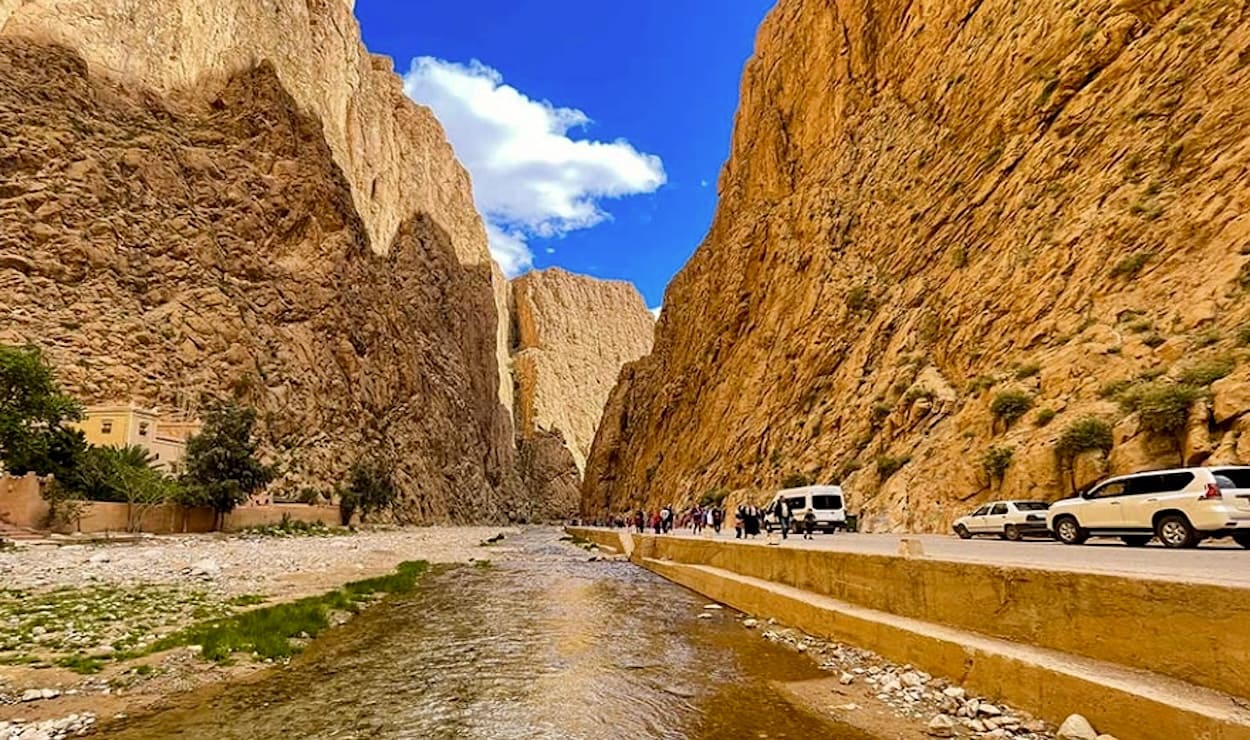
A route combining Marrakech, the High Atlas Mountains, Ait Ben Haddou, Dades Valley, Todra Gorge, Merzouga and N’Kob allows travelers to experience several very different landscapes in one journey.
After the Sahara, N’Kob can provide a quieter cultural experience before continuing toward Marrakech or other destinations.
For travelers who want to avoid rushing from one famous attraction to another, spending time in N’Kob can make a Morocco itinerary feel much more personal.
Why N’Kob Is Worth Discovering
N’Kob may not have the international fame of Marrakech, Chefchaouen or Merzouga, but that is part of its charm.
N’Kob Morocco offers something increasingly valuable for travelers: space, authenticity and time to connect with a place.
It is a village where mountains meet desert, where palm oases surround traditional kasbahs and where Amazigh heritage remains part of everyday life.
If you are exploring southern Morocco, don’t simply drive through N’Kob. Stop, walk, meet the people and allow yourself time to discover it.
Frequently Asked Questions About N’Kob Morocco
Is N’Kob worth visiting?
Yes. N’Kob is particularly interesting for travelers looking for traditional architecture, Amazigh culture, oasis landscapes and a quieter experience in southern Morocco.
What is N’Kob famous for?
N’Kob is known for its traditional kasbahs, palm oasis, Amazigh culture and location near the Saghro Mountains and Draa Valley.
How many days do you need in N’Kob?
One night can be enough to experience the village and oasis, while two nights are better if you want to explore the surrounding Saghro Mountains.
Can I visit N’Kob from Marrakech?
Yes, but N’Kob is far enough from Marrakech that it is better included as part of a multi-day southern Morocco or Sahara itinerary rather than as a traditional day trip.
Is N’Kob near the Sahara Desert?
N’Kob is in southeastern Morocco and can be included on routes connecting the Draa Valley and Saghro region with the Sahara around Merzouga.
Discover N’Kob with a Local Guide
The best way to experience a place like N’Kob is to travel slowly and connect with the people and landscapes around you.
At Definitely Morocco Tours, we create private Morocco journeys that go beyond the main tourist routes. From Marrakech and the Atlas Mountains to N’Kob, the Draa Valley and the Sahara, our tours focus on local experiences, Amazigh culture and the landscapes of southern Morocco.
If you want to discover a quieter and more authentic side of Morocco, N’Kob Morocco deserves a place on your itinerary.