

Saghro Mountains Morocco: Where the Wild Side of Morocco Begins
When travelers imagine Morocco, they often picture the colorful streets of Marrakech, the High Atlas Mountains or the golden dunes of the Sahara. But between the mountains and the desert lies a much quieter world.
The Saghro Mountains Morocco are rugged, dramatic and remarkably different from the country’s better-known landscapes. Here, volcanic rock formations rise above dry valleys, palm-filled oases appear between barren mountains, and small Amazigh villages preserve traditions that have remained connected to the land for generations.
This is Morocco for travelers who want to go beyond the usual routes.
The Saghro region is especially fascinating around N’Kob, the Draa Valley and the routes leading toward the Sahara. It offers a combination of mountains, kasbahs, desert landscapes and Amazigh culture that is difficult to experience in the more crowded tourist destinations.
Where Are the Saghro Mountains in Morocco?
The Saghro Mountains are located in southeastern Morocco, south of the High Atlas and north of the Draa Valley.
The region stretches through some of the most spectacular landscapes in southern Morocco, connecting areas around:
- N’Kob
- Tazzarine
- Alnif
- Draa Valley
- Tinghir
- Boumalne Dades
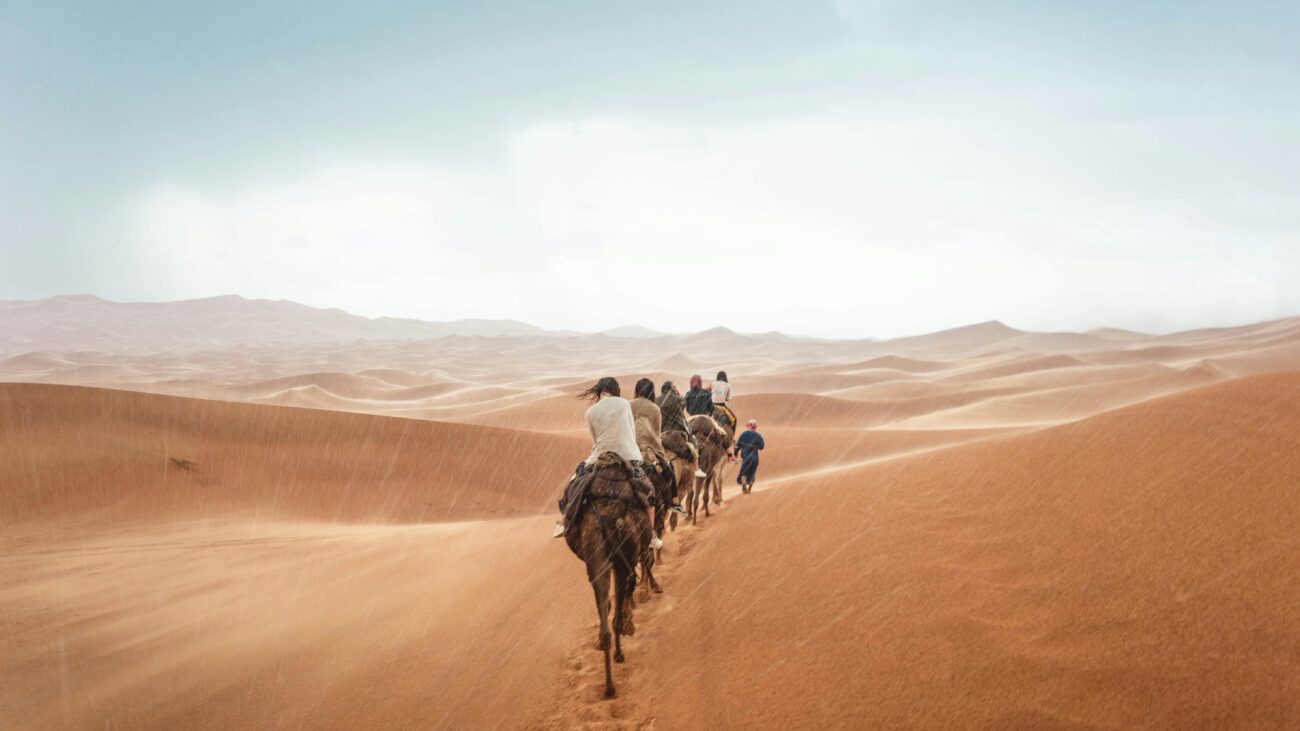
- Merzouga and the Sahara routes
The mountains are part of the transition between the Atlas mountain ranges and the Sahara.
This geographical position is what makes the Saghro so special. In a relatively short journey, you can move from high mountain scenery to rocky valleys, palm oases, traditional kasbahs and eventually the desert.
Why Visit the Saghro Mountains?
The Saghro Mountains offer a very different experience from Morocco’s most famous tourist destinations.
1. Wild and Dramatic Landscapes
The scenery is raw and powerful.
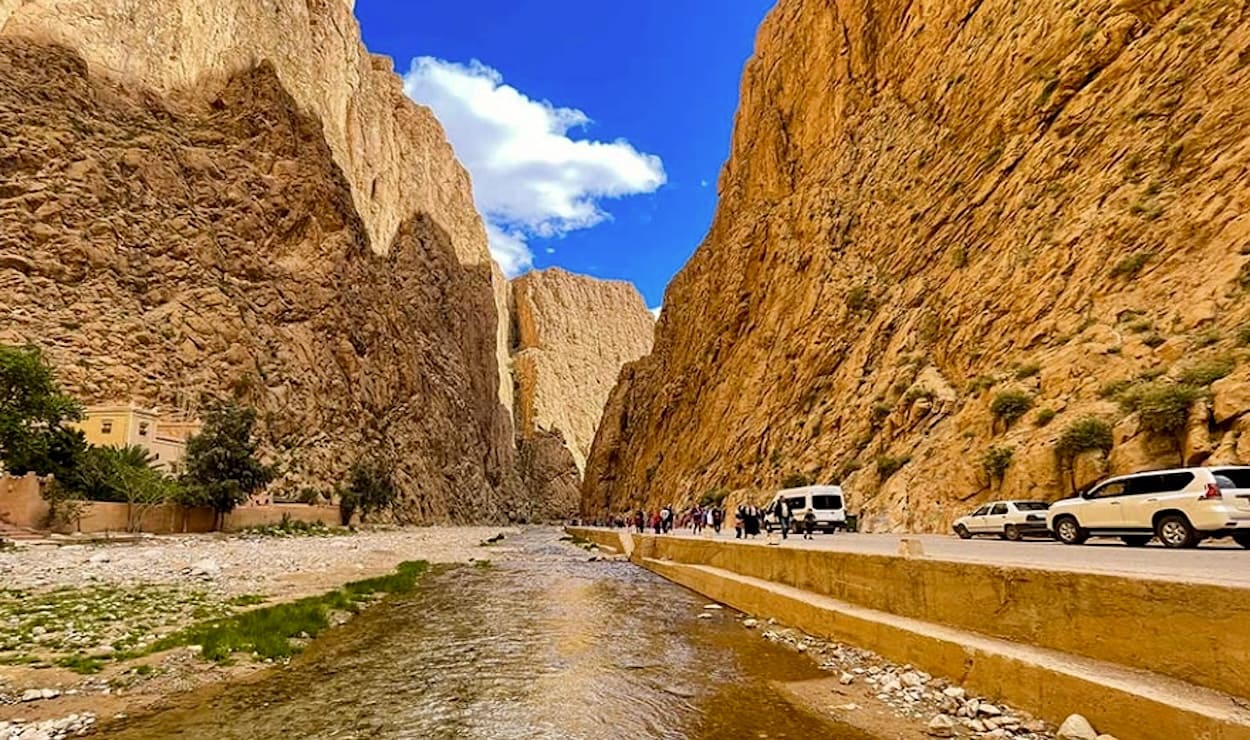
Instead of lush forests or snow-covered peaks, the Saghro is characterized by dark volcanic rocks, dry valleys, cliffs, plateaus and unusual geological formations.
The landscape changes constantly as the road winds through the mountains.
One moment you may be surrounded by enormous rock formations; a little later, you can find yourself looking over a green oasis filled with date palms.
2. A Less-Touristic Side of Morocco
One of the greatest attractions of the Saghro Mountains is the feeling of space.
You won’t find the same concentration of tourists that you encounter in Marrakech, Ait Ben Haddou or the most popular Sahara routes.
For travelers looking for off the beaten path Morocco, this region offers something increasingly rare: the opportunity to experience landscapes and communities at a slower pace.
3. Amazigh Culture
The Saghro region has deep Amazigh roots.
Traditional villages, architecture, food, music and hospitality are all part of the cultural identity of southeastern Morocco.
Traveling through the region with a local guide can transform the journey from simply looking at landscapes into understanding the people who have lived among them for generations.
Saghro Mountains Trekking
For adventurous travelers, Saghro Mountains trekking is one of the best ways to discover the region.
Unlike a simple road trip, trekking allows you to experience the mountains at walking pace.
You can cross rocky valleys, walk between unusual volcanic formations, visit remote villages and spend nights beneath an enormous sky.
Popular trekking experiences can include:
- Multi-day mountain hikes
- Walking between valleys and villages
- Camping in remote landscapes
- Local mountain-guide experiences
- Sunrise and sunset walks
- Traditional meals with local communities
- Exploring the landscapes around N’Kob and the Saghro massif
The best trekking route depends on your fitness level, season and the type of experience you want.
For a comfortable adventure, a local guide is highly recommended, particularly for longer routes through remote terrain.
Bab N’Ali: One of the Saghro’s Most Spectacular Landscapes
Among the most impressive places in the Saghro region is Bab N’Ali.
Its dramatic rock formations rise from the surrounding landscape and create one of the most recognizable scenes in southeastern Morocco.
The enormous cliffs and isolated rock towers make the area particularly impressive at sunrise and sunset, when the changing light emphasizes the shapes and textures of the mountains.
For photographers and travelers looking for something different from the classic Moroccan landscapes, Bab N’Ali is a memorable stop.
N’Kob: The Gateway to the Saghro Mountains
If you want to understand the connection between the Saghro Mountains, Amazigh culture and the desert, N’Kob Morocco is an excellent place to begin.
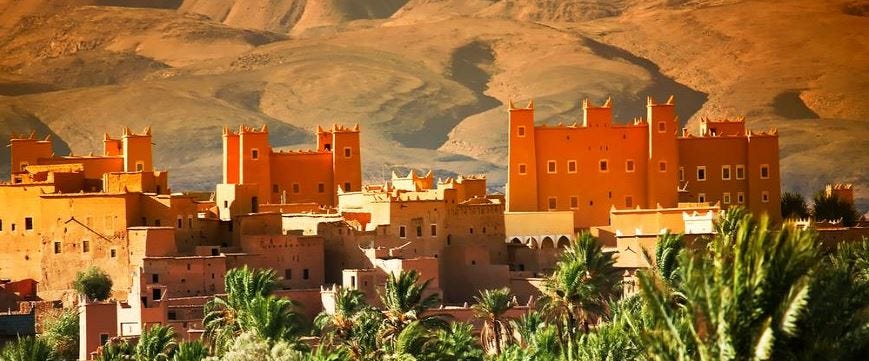
N’Kob is known for its traditional kasbahs, palm oasis and spectacular setting between the Saghro Mountains and the Draa Valley.
The village provides a fascinating contrast between architecture and landscape.
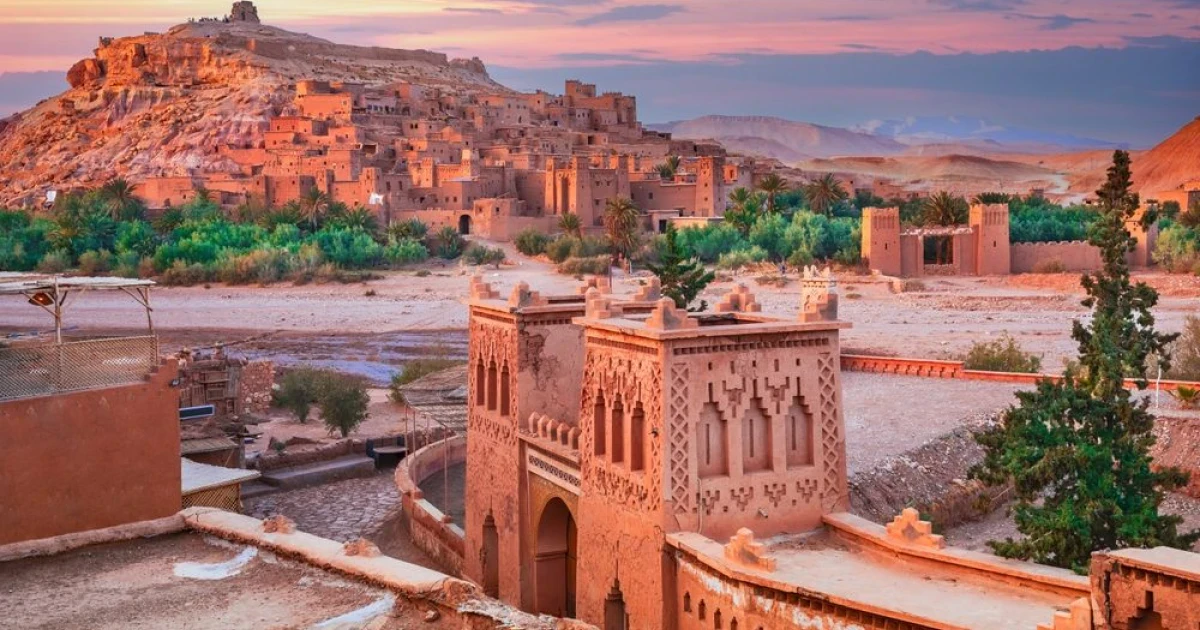
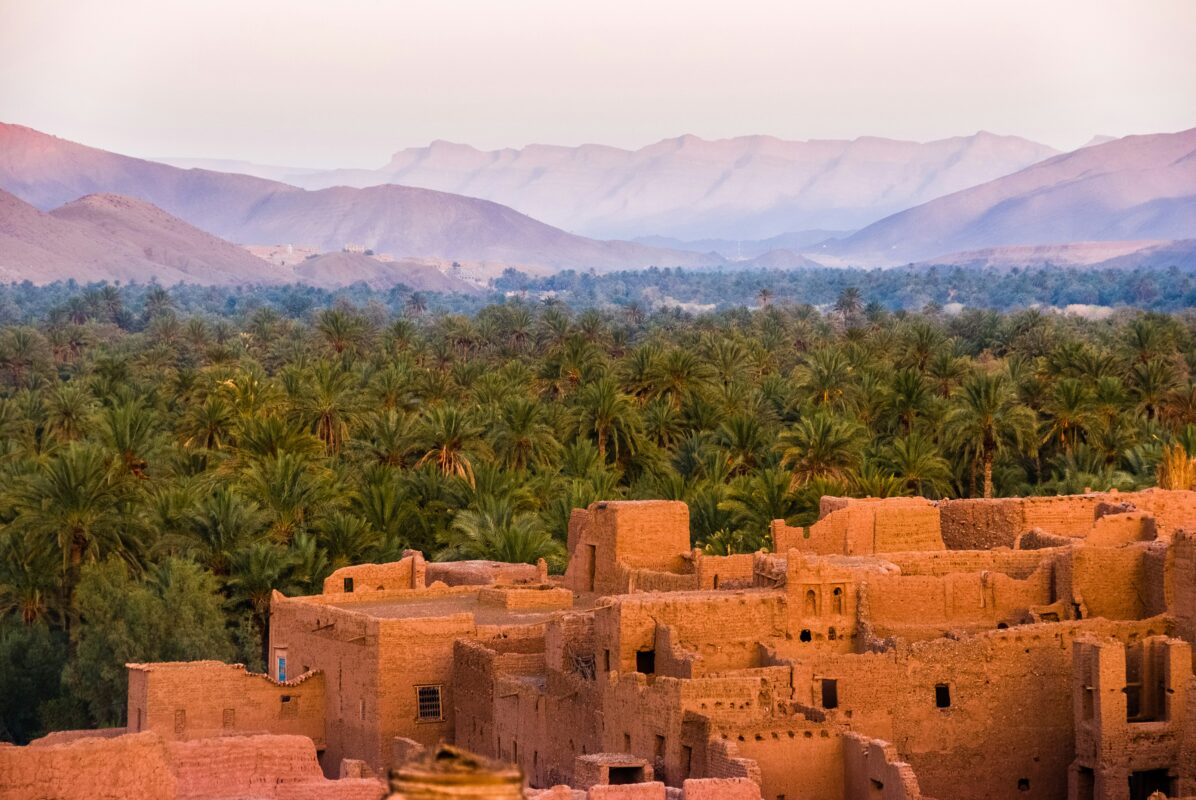
Traditional mud-brick kasbahs sit beside green palm groves, while the rugged mountains rise behind them.
N’Kob is also an ideal base for travelers who want to explore the surrounding region without rushing from one major tourist attraction to another.
You can spend a night in a traditional kasbah, explore the oasis, meet local people and continue toward the Saghro landscapes the following day.
The Saghro Mountains and the Draa Valley
The Saghro Mountains and the Draa Valley are closely connected.
As you travel south from the mountains, the landscape gradually changes. Rocky terrain gives way to the enormous oasis system of the Draa Valley, where thousands of palm trees create a green ribbon through an otherwise dry landscape.
The contrast is extraordinary:
Dark mountains.
Green palm groves.
Ancient kasbahs.
Dry desert valleys.
This is one of the reasons southeastern Morocco is so rewarding for travelers who have more time than a standard Marrakech itinerary.
When Is the Best Time to Visit the Saghro Mountains?
The best seasons for exploring the Saghro Mountains are generally autumn, winter and spring.
Autumn
September to November can offer pleasant conditions as temperatures become more comfortable after the summer heat.
Winter
Winter is an excellent season for trekking because daytime temperatures can be comfortable, although nights in the mountains can become very cold.
Spring
March to May is another beautiful period, with comfortable temperatures and changing landscapes.
Summer
Summer can be extremely hot, particularly in the lower valleys and desert areas. Trekking during the hottest part of the day is not recommended.
If you plan a multi-day hike, your route should always be adapted to the current weather and local conditions.
How Many Days Do You Need in the Saghro Mountains?
You can see parts of the Saghro region during a road trip, but 2 to 4 days is a better timeframe if you want to experience the mountains rather than simply drive through them.
A longer itinerary could combine:
Marrakech → Ait Ben Haddou → Ouarzazate → Dades Valley → Saghro Mountains → N’Kob → Draa Valley → Sahara
This route allows you to experience several sides of Morocco in one journey.
You move from imperial and historic landscapes through the High Atlas, valleys and mountains before reaching the desert.
Saghro Mountains vs High Atlas Mountains
Both mountain regions are spectacular, but the experience is different.
| Saghro Mountains | High Atlas Mountains |
|---|---|
| Rugged volcanic landscapes | Higher mountain peaks |
| Dry valleys and rocky terrain | More varied alpine scenery |
| Quieter and less touristy | More popular with visitors |
| Strong connection with southeastern Morocco | Popular around Marrakech |
| Excellent for off-the-beaten-path travel | Excellent for classic mountain trekking |
| Close to N’Kob and Draa Valley | Close to Marrakech |
If you want dramatic landscapes and a quieter journey, the Saghro Mountains Morocco can be an excellent alternative to the more famous mountain routes.
What to Bring for a Saghro Mountains Adventure
If you are planning to trek or spend time in remote areas, pack appropriately.
Useful items include:
- Comfortable hiking shoes
- Lightweight layers
- Warm clothing for the night
- Sun protection
- Sunglasses
- A reusable water bottle
- A small backpack
- Headlamp for overnight trips
- Camera
- Basic personal medication
- Comfortable clothing suitable for walking
For multi-day trekking, your local guide or tour operator can advise you on the equipment required for your specific route.
Is Saghro Mountains Trekking Difficult?
The difficulty depends on the route.
Some walks are relatively accessible, while multi-day crossings can require good physical condition and experience with mountain terrain.
The dry climate, uneven rocky surfaces and long distances can make certain routes demanding.
You don’t need to be an expert mountaineer to discover the Saghro, but choosing the right route is important.
A local guide can help adapt the experience to your fitness level and interests.
Why the Saghro Mountains Feel Different
There is something about the Saghro that is difficult to describe in a standard travel guide.
Perhaps it is the silence.
Perhaps it is the contrast between the barren mountains and the green oasis below.
Or perhaps it is the feeling of standing in a landscape where roads, villages and ancient traditions still follow the rhythm of the land.
The Saghro is not simply somewhere to visit.
It is somewhere to slow down.
Explore the Saghro Mountains With a Local Guide
At Definitely Morocco Tours, we believe Morocco is best experienced beyond the main tourist routes.
Our journeys through southeastern Morocco can combine the Saghro Mountains with N’Kob, the Draa Valley, Dades Valley and the Sahara, depending on your interests and available time.
As a local Moroccan tour operator, we focus on private journeys, local experiences and flexible itineraries rather than rushing from one attraction to another.
Whether you want a mountain adventure, an off-the-beaten-path road trip or a journey connecting the Atlas and Sahara, we can create a route around the experience you want.
The Saghro Mountains are wild, quiet and deeply connected to the Morocco that exists beyond the usual tourist map. Come and discover them slowly, with a local who knows the land.
Frequently Asked Questions
Where are the Saghro Mountains?
The Saghro Mountains are in southeastern Morocco, south of the High Atlas and north of the Draa Valley, near places such as N’Kob, Tazzarine and Alnif.
Are the Saghro Mountains worth visiting?
Yes. They are particularly worthwhile for travelers interested in dramatic landscapes, trekking, Amazigh culture and quieter destinations away from Morocco’s busiest tourist routes.
Can you visit the Saghro Mountains from Marrakech?
You can include the Saghro Mountains in a longer private itinerary from Marrakech, but visiting the region as a rushed day trip is not recommended. A multi-day journey gives you much more time to appreciate the landscape.
What is the best time for Saghro Mountains trekking?
Autumn, winter and spring are generally the most comfortable seasons for trekking, while summer can be extremely hot.
Is N’Kob in the Saghro Mountains?
N’Kob is located in the southeastern Moroccan region at the edge of the Saghro Mountains and is one of the best places to explore the connection between the mountains, oasis landscapes and Amazigh culture.
Can the Saghro Mountains be combined with the Sahara?
Absolutely. The Saghro Mountains, N’Kob and the Draa Valley can be combined with a Sahara itinerary, creating a journey through some of the most diverse landscapes in southern Morocco.
Final Thoughts
The Saghro Mountains Morocco offer a side of the country that many visitors never see.
They are rugged rather than polished, quiet rather than crowded, and deeply connected to the Amazigh communities and landscapes of southeastern Morocco.
If your idea of Morocco goes beyond Marrakech and the famous Sahara dunes, consider taking the road toward the Saghro.
You may discover that some of Morocco’s most unforgettable moments are found between the places everyone already knows.